STOURTON and GASPER HISTORY
FARMING

Percherons at Home Farm
‘Up until the mid-thirties or early thirties, everything depended on horsepower but then the tractors came along and everything became mechanised very rapidly. We had lorries and we didn’t have to build hayricks anymore. I mean, Home Farm was gorgeous really with all these beautifully made ricks and thatched to perfection. Once the combine harvester came in, well, it was very efficient but it spoilt the appearance and the pride of the place, I thought…’ Margaret Trussler
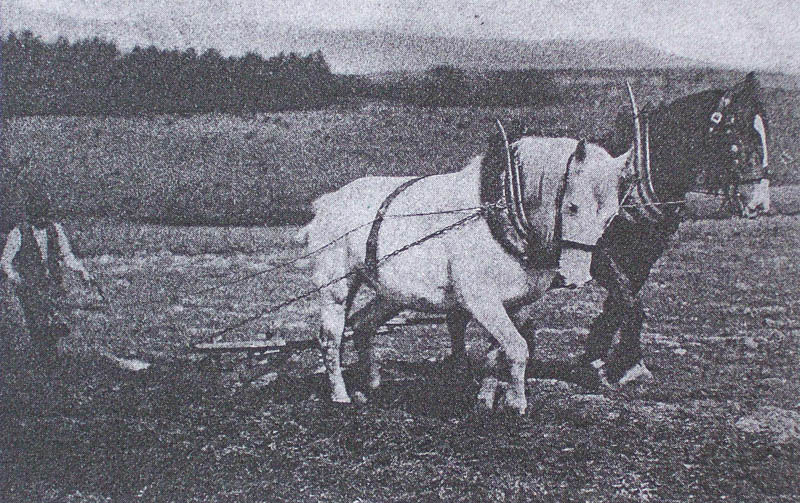
Ploughing
‘Home Farm was arable. Corn and mainly a dairy farm with a famous short horn herd, which, I think, was quite famous throughout the South and West, if not across the whole country. The late Sir Henry (Hoare) took a very great interest and he would ride around the farm with my father (Major Aldridge, Land Agent) on horseback every day of the week …’ Margaret Trussler
‘Farming fell down in the early ‘20s – it just didn’t pay. Whatever they did, they just couldn’t make it pay …’ Jim Gatehouse
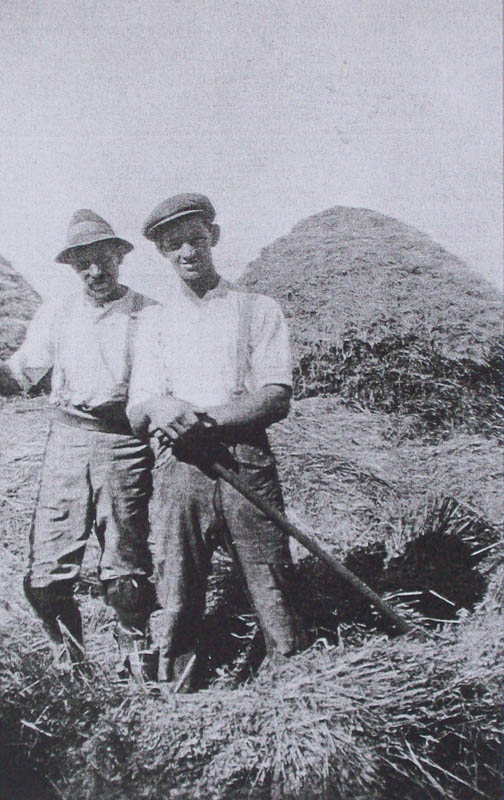
Davis and Brimble - rick thatcher at Home Farm and cottage thatcher on Stourhead Estate, c 1930
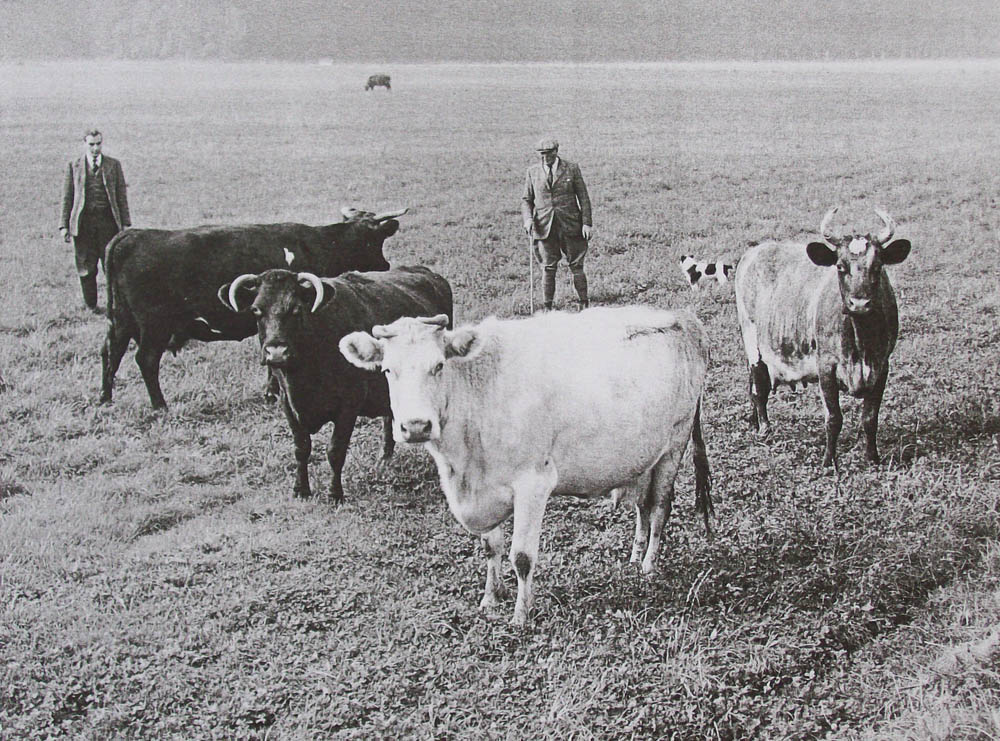
Pedigree Shorthorns, Home Farm. John Trussler & Major Aldridge
‘In the thirties, the tractor driver, his tractor was his life and he worshipped it and he would start work at 7 in the morning and by 7.20 he’d been with his oil can absolutely oiling every little bit, otherwise it wouldn’t work all day and he maintained it and, well, worshipped it, until it was put back in the tractor shed at night…’ Margaret Trussler
‘My father said that when he used to come in here to play as kids, the whole yard (at Coldcot Farm) was bedded up with straw every day to make manure because he (Alan Pickford) was a true organic farmer. He had one man, who used to spend his whole life spreading muck, summer and winter…’ Stephen Harris
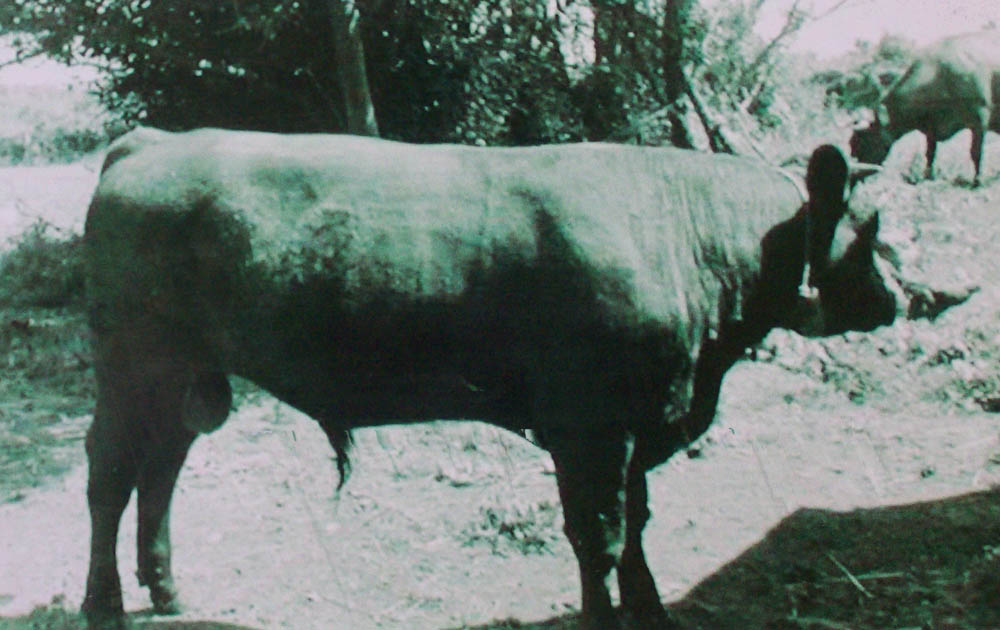
Prize Bull at Home Farm

Home Farm Open Day. Cecil Creen, John Doggrell, Roger Norris, Mr Russell.
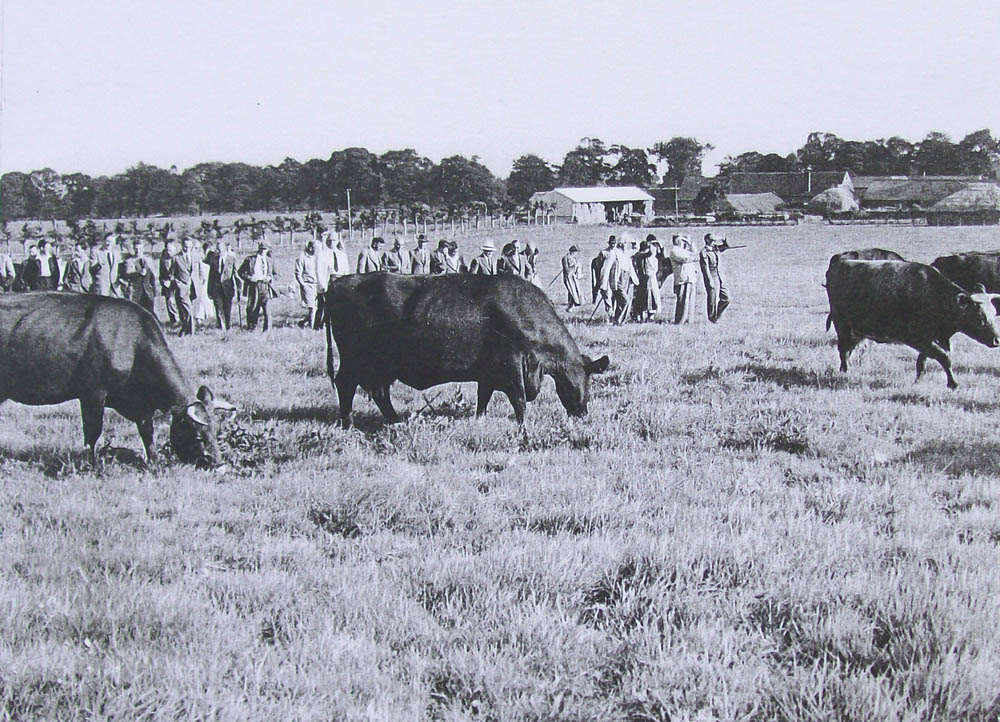
Tour of Shorthorn herd at Home Farm. Thatched ricks in the background.
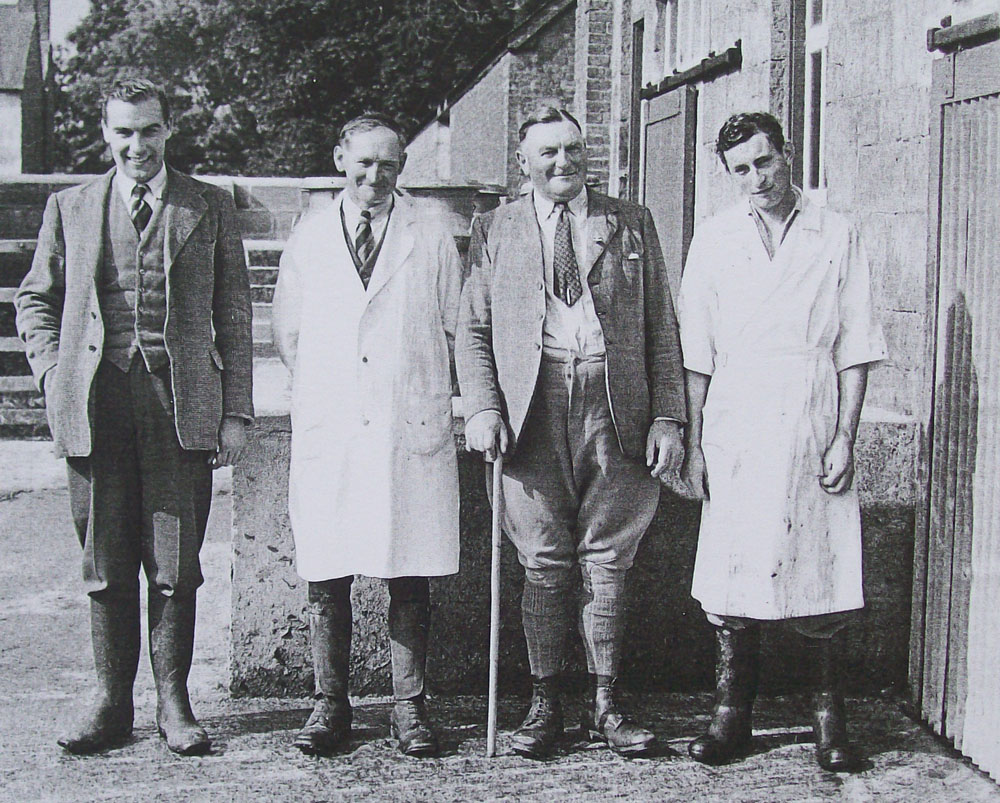
John Trussler, Fred Russell, Major Aldridge, Will Russell.
‘Farming’s changed. Now it’s all wiping things out really. Never see a turtle dove now, haven’t seen one now for 30 years. Used to be loads of them, they’d come and feed amongst the chickens. Every Spring they used to turn up because they’re migrants and they come in from Africa and go back in the Autumn…’ David Andrews
‘After the war, I always remember Bill Jones asking what it was. It was a tractor - and Bill Jones said “bloody load of rubbish” he said “a load of rubbish these Fords are and I’d like to tell you, that load of rubbish cost Mr. Hoare five hundred and some odd pounds.” It would cost them £50,000 now, wouldn’t it…’ Tom Chapple
‘The biggest change round here is there’s no milk lorry now. The milk lorry used to come up to Gasper Farm and Heath Hill Farm, Top Lane Farm, Bonham Farm – collecting milk churns in the morning, chuck off a few empties. None of that now…’ David Andrews
‘Father flung away the milking machine in about 1934. He didn’t like the thing, they weren’t very efficient because people didn’t realise that you had to breed the cattle that suited the machine…’ Gordon Pickford
‘Alan Pickford (father of Gordon, the previous tenant) still holds the record here for the cow, on Coldcot Farm, that gave the most milk in her lifetime. She gave more milk than any other cow in the world – it’s in the Guinness Book of Records. It was Elderflower XIII…’ Stephen Harris
‘Gordon Pickford (when he sold the tenancy) claimed something on this farm, that I think only three people have claimed before and that was Sod Value. Sod Value is the protection of the permanent pasture and for protecting the sod. He got £120 an acre for protecting the sod…’ Stephen Harris
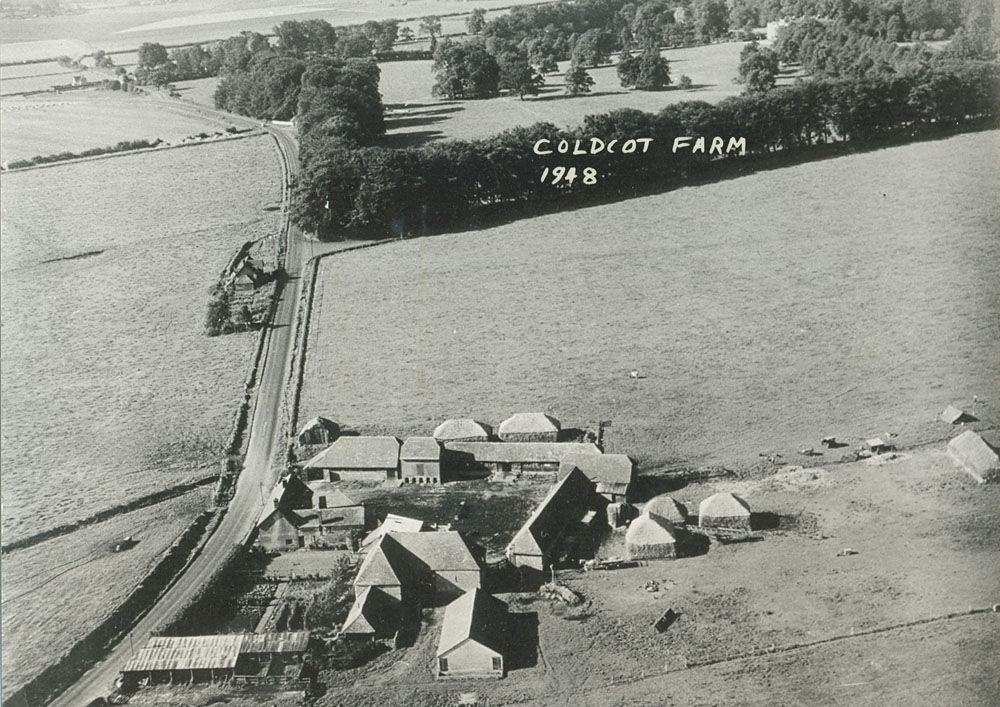
Coldcot Farm 1948

Coldcot Farm, September 1942
‘The tractor was taking the place of three horses really but you couldn’t get machinery without a form. We got a rubber-tyred tractor in 1940. In ’42 we got a permit for a steel wheel one, £255 that one was. The forks for the plough were £200 for two. £25 for the plough…’ Gordon Pickford
‘Always the biggest argument when a farm changed hands was always the hedges, the dilapidations of them. There was always an uproar…’ Gordon Pickford
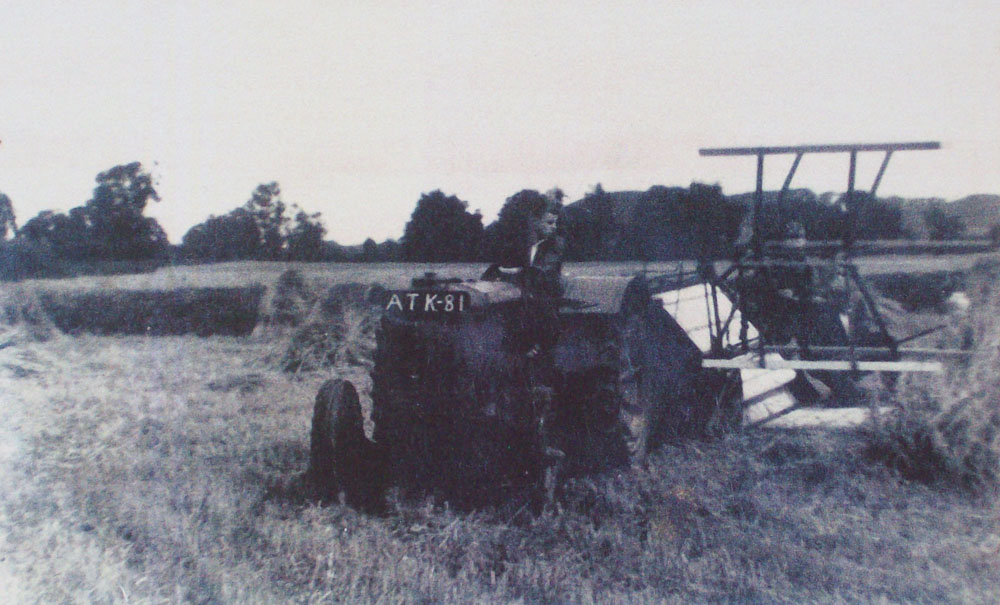
Coldcot Farm, Harvest 1941. Gordon Pickford (aged 15) on tractor, Percy (Ireland?) on binder with evacuee.

Coldcot Farm, Percy and the new tractor, 1947
‘We tendered for this National Trust Farm (Coldcot Farm) in ’84, and I think there were about eighty tenders for it and we came for three rounds of interviews and we eventually got it…’ Stephen Harris
‘Farmers are funny though, you know, as soon as one starts harvesting, the others have got to start. Oh, there’s terrible rivalry …’ Louise Harris
‘I bought a herd of pedigree cattle. I bought 63 cows, all pedigree Fresians and we could trace their ancestry back to the 1930s and what I liked about them was, I think about 20 of them came from mothers that had had nine calves or more. They were a very long-living herd of cows – traditional British Fresians…’ Stephen Harris
‘The milking parlour (at Coldcot Farm) still works. Eventually we might have a young chap in, if he wants to have a herd of milking cows. We might go back, go full circle, which will be nice…’ Louise Harris
‘I knew nothing at all about farming. After ’63, I didn’t want to know anything more about farming. That was the winter I woke up one morning and our breath was condensed on the eiderdown and I said: "right, we will have some heating in this farm or I am off." So we did…’ Hazel Pickford